
A quick guide to denture care
By Natalia Trofimova, DD ·
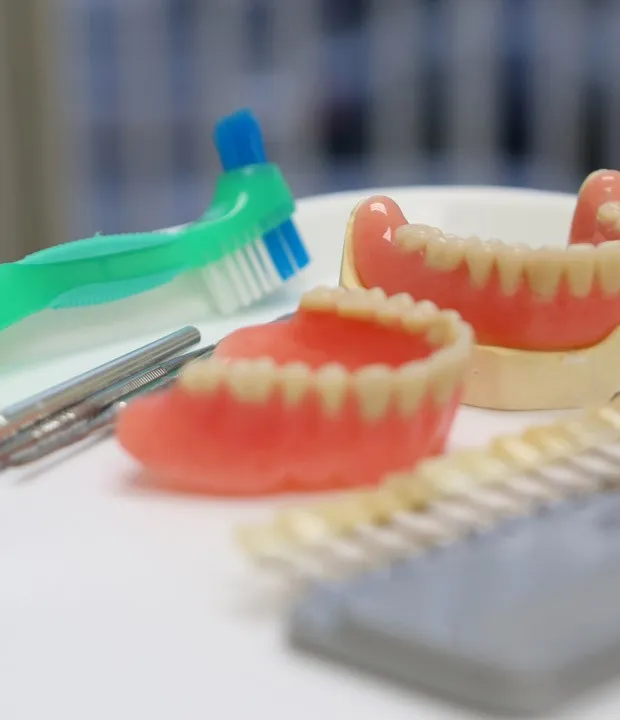
Good denture hygiene protects your oral health and helps your dentures last longer.
Just like natural teeth, dentures need regular care. It keeps them comfortable, helps prevent sore gums and protects any natural teeth you still have. Poor denture hygiene is a risk to your oral health and even your general health. Here’s a simple guide to follow.
Four routines
- Rinsing after a meal or snack
- Daily cleaning
- Overnight soaking
- Storing when you’re not wearing them
What you need
- A denture brush, or any soft-bristled brush.
- Denture cleaning tablets. They dissolve in water to make a cleaning and soaking solution. Follow the instructions on the package.
- Gauze or a soft toothbrush.
- A towel, to handle your dentures over a soft surface so they don’t break or chip if you drop them.
- A sink.
- An ultrasonic cleaner (optional). It cleans dentures with high-frequency sound in water. It doesn’t replace daily brushing.
Routine 1. Rinsing after a meal or snack
Step 1. Remove and rinse. Fold a towel in the sink or lay it beside it. Run lukewarm water over your dentures to remove food and loose particles. Handle them carefully and don’t bend plastic or metal parts.
Step 2. Clean your mouth. Brush any natural teeth with a soft brush. Use gauze or a soft toothbrush to clean your tongue, cheeks and palate. Remove any leftover denture adhesive.
Routine 2. Daily cleaning
Start with steps 1 and 2 from Routine 1, then:
Step 3. Soak and brush your dentures with a soft brush and denture cleanser. Remove any leftover adhesive. Always rinse off the cleanser before you put your dentures back in, and never use denture cleanser inside your mouth.
Routine 3. Overnight soaking
Soak your dentures in a container of lukewarm or cold water with a denture cleaning tablet dissolved in it, following the instructions on the package. Rinse them well before wearing. If you have no tablets, clean your dentures as usual and leave them overnight in clean lukewarm water.
Routine 4. Storing when you’re not wearing them
Keep your dentures in denture cleanser solution, or in lukewarm or cold water if you have no tablets. Dentures need to stay moist: if the plastic dries out, it can shrink, fit poorly and become brittle.
What to avoid
- Abrasive cleaners, like stiff brushes, strong cleansers and abrasive toothpaste. They can damage the denture and lead to breaks.
- Whitening toothpaste. It contains peroxide and doesn’t change the colour of denture teeth.
- Bleach. It weakens the denture material and whitens the pink gums. Chlorine can also tarnish and corrode metal parts.
- Hot water. Hot or boiling water can warp your denture.
When to see your denturist
Besides your daily routines, see your denturist:
- Every year for a check-up. Your denturist examines your mouth, cleans your dentures and adjusts the fit if needed.
- Right away if your denture is loose, rocks or moves, feels uncomfortable, or you notice sore spots in your mouth.
Have a wonderful day, and as always, smile freely.